
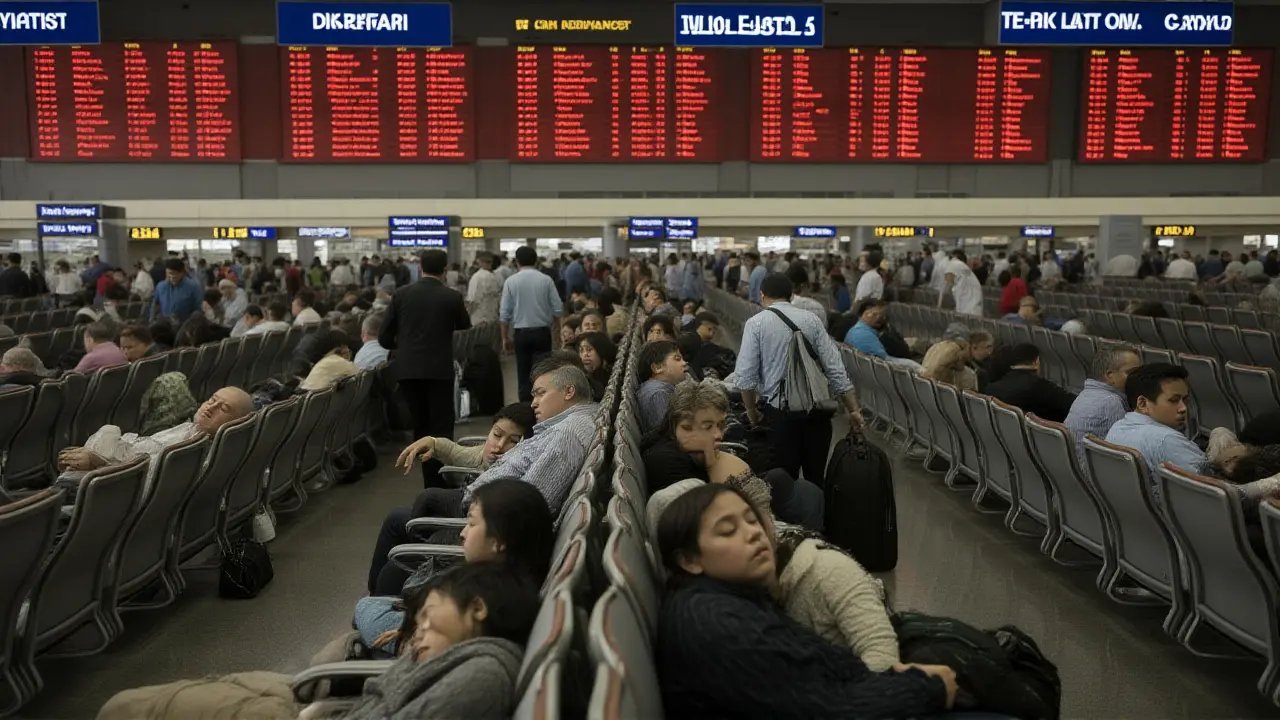
The dust is finally settling on what became one of the largest civilian evacuations in recent memory. As of March 13, 2026, the Government of Canada announced this marks the final daily update on the unfolding situation across the Middle East. For weeks, families held their breath, wondering if and when their loved ones would step off those planes onto North American soil.
That worry began to shift toward gratitude. Foreign Affairs Minister Anita Anand, Minister of Foreign Affairs led the charge alongside Global Affairs Canada. The mission was clear: get Canadians home safely, no matter how chaotic the region had become.
The Numbers Behind the Rescue Mission
By the time operations wound down, the statistics told a sobering story of risk and relief. More than 110,700 Canadians were registered in the voluntary Registration of Canadians Abroad system as of March 12. That number, however, doesn't capture everyone. Some left quietly without updating profiles, while others stayed put despite the chaos. Of those registered, roughly 3,500 officially requested assistance to leave.
But the real measure of success lies in the returns. Since February 28, nearly 8,500 Canadians and permanent residents made it back to Canada. They traveled through direct routes or stopped briefly in safe third countries. The math is simple but powerful: thousands are home. The Government of Canada also facilitated the departure of over 1,000 citizens to secure locations elsewhere, ensuring no one was trapped indefinitely.
Logistics of Moving People Through Conflict
Moving people through active war zones isn't like booking a holiday cruise. The evacuation proceeded through three primary methods: charter flights, block bookings on commercial airlines, and ground transportation where roads remained open.
On March 7, 2026, a critical charter flight launched from Dubai to Istanbul, accommodating 180 Canadians. This wasn't free; it was arranged on a cost-recovery basis. Around the same time, officials worked with Air Arabia to block-book seats on two separate flights. Expectations set at 45 to 50 Canadians per flight. Meanwhile, an agreement with Emirates allowed 51 travelers to purchase tickets on a flight heading straight to Toronto.
In Beirut, the situation required different tactics. The mission secured 200 seats across four flights to Istanbul. If those spots went unused, the plan was to offer them to European missions. By the time these operations concluded, the Beirut team had coordinated 325 seats on Middle East Airlines. On the ground, four chartered buses moved 180 passengers from Qatar to Saudi Arabia starting March 7. Delays did happen—airspace closures caused passport delivery issues—but gradual resumptions of air travel helped clear the backlog.
Funding and Regional Aid Packages
Getting people out was only half the battle. Stability in the region matters for long-term safety. On March 12, 2026, the Government of Canada announced $37.7 million in funding for Lebanon. This money targets critical needs: food, medical services, shelter, and clean water. It was a direct response to requests from the Lebanese government.
To protect those who couldn't leave immediately, the Canada Border Services Agency (CBSA) imposed an Administrative Deferral of Removals to Israel and Lebanon effective March 7. This regulatory move kicks in when widespread violence poses a generalized threat. Essentially, it prevents forced returns during unsafe conditions.

International Allies Lend a Hand
Diplomacy played a massive role here. Canada didn't work alone. Coordination with Australia, New Zealand, and the United Kingdom proved vital for mutual consular support. At border crossings, staff assisted each other's nationals, sharing resources stretched thin by the crisis.
Cross-support extended beyond allies. Canada offered unclaimed seats to nationals from Egypt, Ireland, Jordan, Kuwait, and the United States Department of State was facilitating its own charters from the UAE and Saudi Arabia. Gratitude was expressed to Armenia, Azerbaijan, Turkey, and Turkmenistan for opening borders from Iran, while Japan and Singapore offered seats on buses and flights. It was a rare moment of global unity amidst regional fragmentation.
Current Status and Future Travel
As the dust settles, commercial flight options are slowly returning. Air Canada noted cancellations for Toronto-Dubai until late March, but things are normalizing. On March 11, the Emergency Watch and Response Centre saw calls drop to just over 400—the lowest since the crisis began. Previously, the number hit 1,400 daily at the peak.
Most recent enquiries now come from travelers in the UAE and Qatar asking about documents rather than immediate rescue. With commercial flights resuming in parts of the region, demand for government-coordinated transport has naturally declined. The machinery of state intervention is standing down, leaving way for regular travel to resume.
Frequently Asked Questions
How does this affect Canadians currently living abroad?
If you are still in the Middle East, you should register with the Government of Canada online. While daily updates have paused, assistance remains available if emergencies arise. The focus has shifted from mass evacuation to supporting travel document processing and monitoring safety advisories.
Did the government cover costs for evacuation flights?
Most charter flights were handled on a cost-recovery basis, meaning travelers paid for their seats. However, Global Affairs Canada facilitated block bookings and access to unclaimed seats on commercial carriers to maximize affordable exit options. The $37.7 million aid package goes to local humanitarian relief, not individual travel refunds.
What happened to the travel advisory status?
Advisories remain in effect depending on the specific country. The CBSA Administrative Deferral of Removals protects individuals from being deported to Lebanon or Israel while safety conditions pose a generalized threat. Always check travel.gc.ca before departing or returning.
Can citizens of other countries use Canadian evacuation seats?
Yes, in specific instances. During this operation, Canada offered empty seats on assisted departures to nationals from allied nations like Ireland and the United States. This was part of broader diplomatic cooperation to clear borders efficiently for all affected civilians.
Comments (12)
-
megha iyer March 26, 2026
The money spent here could fix local roads instead.

-
Mel Alm March 27, 2026
its relifing to see so many people come home safe and sound finally after all teh wait and worry

-
Paul Smith March 27, 2026
I am glad everyone is safe now. It costs too much though. We should prepere earlier. The airforce was needed badly. Ground transport is hard. Dubai airport was busy. Bus lines in Qatar worked ok. Neighbors helped us out. Turkey opened doors wide. Japan did the same thing. Money for Lebanon is good. Medical aid is needed. Water shortages are big. We need to plan ahead. Next time do not wait. Hope families heal now.

-
Gary Clement March 29, 2026
the block booking seats were mostly sold off through emirates and air arabia which saved a lot of logistical space compared to charters because commercial flight schedules allowed for better distribution of the load and fewer delays occurred due to fueling stops since they used existing infrastructure that was already established and vetted by security teams beforehand so the risk factor dropped significantly when utilizing those routes instead of pure government planes

-
nikolai kingsley March 29, 2026
why did we pay for everything why cant the govt just send us free tickets it feels wrong to make poor peeps pay for safety when the war is on our soil essentially speaking

-
Mason Interactive March 30, 2026
it shows how global alliances actually work when push comes to shove because seeing us share seats with irish and american citizens proves there is still some trust left between nations even in chaos

-
Anil Kapoor March 30, 2026
The statistics indicate a registration gap where voluntary systems failed to capture individuals who were in transit zones before lockdown measures were fully implemented by regional authorities which created an additional layer of complexity for consular staff during the peak operational window.

-
Aaron X March 31, 2026
we observe a paradigm shift in sovereign citizen protection protocols where the state apparatus engaged in dynamic resource allocation strategies to mitigate existential threats against diaspora populations situated within unstable geopolitical theaters of operation during high intensity conflict scenarios.

-
Antony Bachtiar March 31, 2026
This lookes like a failure to act sooner and the numbers suggest we let people suffer too much before stepping in with help because the delay in decision making cost people their savings and peace of mind for weeks on end

-
Alex Green international April 2, 2026
The administrative deferral of removals provides necessary legal protections for individuals facing generalized threats which allows for continued presence without fear of deportation into dangerous zones while conditions remain volatile and unpredictable in nature

-
Dianna Knight April 4, 2026
Sending love to everyone involved :D the supply chain logistics for humanitarian aid packages were handled with remarkable efficiency considering the scale of the disruption in the supply routes and communication channels remained active throughout the crisis period :) thanks to the coordination.

-
Gary Clement April 4, 2026
the cost recovery model meant passengers funded the flights but the government absorbed the overhead for route negotiation and security clearance which kept ticket prices lower than standard charter rates during such high volatility market conditions