

The wait continues for South Africa's new traffic laws, with a major announcement from Pretoria shifting the timeline once again. Transport Minister Barbara Creecy confirmed last month that the full national rollout of the Administrative Adjudication of Road Traffic Offences Act will not happen in December 2025 as previously planned. Instead, motorists have more breathing room, with the deadline moving to July 1, 2026.
This decision comes after a thorough review revealed that local authorities simply aren't ready yet. Some municipalities still lack the systems and trained staff required to handle the massive influx of infringement notices expected under the new regime. It's not just about software; the paperwork and funding structures need to align perfectly before the switch flips. The transport sector knows how messy things get when the infrastructure lags behind the policy, so this delay is actually a necessary pause.
Why the Rollout Was Postponed
According to the announcement made in November 2025, the primary driver behind the delay was a departmental readiness review conducted by the Department of Transport. The findings were blunt: uneven system integration across metros meant enforcement would be inconsistent if launched immediately. Imagine being fined differently for speeding in Johannesburg versus Durban—that's the scenario officials wanted to avoid. Funding questions tied to municipal participation also needed resolution. Money talks, and without clear budgets for enforcement officers and technology maintenance, the plan couldn't move forward.
Barbara Creecy, Minister of Transport, alongside Deputy Minister Mkhuleko Hlengwa, stated that phased implementation remains active. Pilot areas continue testing the waters while national authorities work on closing the gaps. This approach aims to prevent the chaos seen in previous administrative shifts where backlogs paralyzed courts. By waiting until mid-year, they align the launch with the local government financial cycle, which starts on July 1.
Understanding the Demerit Point System
If you hold a license, you need to know how the scoring works because it changes everything. Under AARTO, most traffic tickets stop being criminal matters handled in court and move to an administrative process. You start with zero demerit points. Licensed drivers can accumulate up to 15 points before their license gets suspended. For learner drivers, the limit is much stricter—just six points.
Here's how it accumulates: points stick for three months. If you drive clean for that period, one point drops off automatically. Once you exceed your limit, an Enforcement Order blocks your license. You can't drive legally until that order is resolved. Serious offenses like drunk driving remain criminal charges under the Criminal Procedure Act, meaning prison time is still on the table for those infractions. The distinction helps clear the clogged criminal dockets but raises stakes for habitual speeders.
High-Tech Enforcement Measures
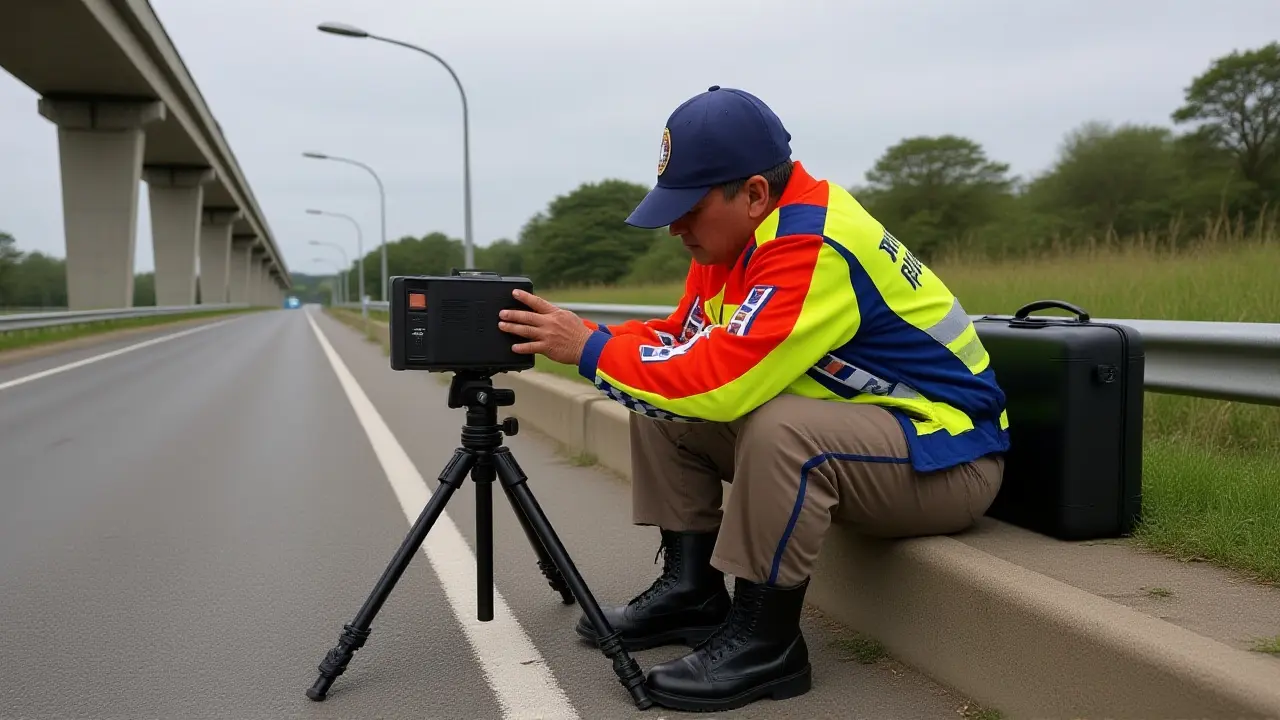
By January 2026, provinces had already begun activating AI-powered cameras. These aren't just old-school speed traps. The new tech detects seat belt violations, mobile phone use while driving, and illegal turns through automated recognition. Once a vehicle is flagged, the number plate is tracked through a database. If you ignore the notice, the system eventually tracks down the registered owner. SABC News reported on sources suggesting repeat offenders face escalating penalties rapidly.
This technological shift implies a move away from reliance on physical roadblocks. Officers on foot patrol complement cameras, ensuring that digital evidence holds up during disputes. For fleet operators, this is critical. Company vehicles are monitored just as closely as private cars. Drivers caught repeatedly could see licenses cancelled entirely after four suspensions. At that stage, driving constitutes a criminal offense regardless of the administrative nature of the initial ticket.
What This Means for Drivers
Motorists have a grace period now to adjust compliance frameworks. The extra time allows employers to update internal policies for company drivers. Fleet managers need to audit their records before July 2026 to ensure no old debts linger. Fines are also being harmonized nationally. Previously, a parking violation cost different amounts depending on the city. The Department of Transport wants to fix this inconsistency so that justice feels uniform across South Africa.
The delay gives everyone a buffer to learn the new rules. There is still uncertainty around how appeals will function initially, but the goal is streamlined administration. Until then, the core rule remains: pay attention to your notices. You have 32 days to pay or respond. Ignoring them leads to enforcement orders, credit score impacts, and potential license blocking. The system is designed to catch people out, but preparation can mitigate the damage.
Frequently Asked Questions
When does the new AARTO system fully apply nationwide?
The full national implementation is scheduled for July 1, 2026. While pilot programs ran earlier, this date marks when all municipalities must be operational under the unified framework.
Can I keep my license if I get too many points?
No, once licensed drivers exceed 15 points, their license is blocked via an Enforcement Order. Learners have a lower threshold of 6 points before suspension occurs automatically.
Who announced the postponement of the law?
Transport Minister Barbara Creecy and Deputy Minister Mkhuleko Hlengwa confirmed the delay in November 2025 following a departmental readiness assessment.
Are criminal charges completely removed from traffic offenses?
Most minor infringements move to administrative handling, but serious crimes like drunk driving and reckless driving remain subject to criminal court appearances.
How long does an infringement notice stay active?
Motorists have 32 days to pay the fine or contest the notice. Points attached to the offense generally reduce by one for every three months of clean driving.
Comments (20)
-
ryan pereyra March 27, 2026
The bureaucratic inertia surrounding the Administrative Adjudication of Road Traffic Offences Act is palpable. One observes how systemic integration failures dictate national policy timelines rather than immediate legislative desires. The delay reveals deeper infrastructural deficiencies within municipal governance structures. We must appreciate the nuance of phased implementation strategies in complex jurisdictions. Technology alignment remains a critical bottleneck for effective enforcement protocols. Infrastructure lags inevitably lead to administrative friction during rollout phases. This postponement highlights the necessity of rigorous readiness assessments before full deployment occurs. Financial cycle alignment suggests a strategic rather than reactive approach to scheduling.

-
Jane Roams Free March 28, 2026
It is wonderful to see officials prioritizing readiness over rushing the process. Drivers benefit significantly from this additional preparation window. The information regarding demerit points is crucial for everyone to understand. Understanding the new system helps prevent unnecessary legal troubles down the road. Community engagement will be essential for successful adoption in the coming months.

-
Anthony Watkins March 30, 2026
This government incompetence is absolutely pathetic :angry: :rage:. Why does everything take forever to fix properly?? They never have the budget ready for basic tech upgrades. It is always the same story with every single project launched here :facepalm:. Citizens deserve better infrastructure than this mess right now!

-
Jason Davis March 31, 2026
Hey guys i think its important we all read the rules closely. The grase period helps us learn what to do before fines hit. If u ignore notices ur license gets blocked really fast. Its best to pay attention to those emails about infringements. We can all help our friends stay informed about the changes too.

-
Crystal Zárifa April 2, 2026
The universe often tests us with bureaucratic delays just before major shifts occur. This pause feels less like an accident and more like cosmic timing for financial cycles. We sit back and watch the machinery grind until it finally clicks into place. Absurdity is the only logical conclusion one can draw from the timeline updates. Still, safety improvements eventually outweigh the frustration we feel waiting.

-
Serena May April 2, 2026
Data shows readiness issues are real 📉📊. Delays happen when systems crash 💀🚫. We need better tracking tools 🔧.

-
Cheryl Jonah April 4, 2026
They claim funding gaps exist but sources suggest otherwise. Hidden agendas drive most of these official announcements regarding public transport laws. Something deeper is definitely going on behind the closed doors of ministerial meetings. The technology rollout seems convenient for certain surveillance interests in urban areas. Trust in the transparency of these reports remains extremely low among skeptical observers.

-
James Otundo April 5, 2026
Fascinating how the masses panic over nothing while elites adjust their portfolios accordingly. The common driver simply absorbs the chaos generated by administrative incompetence. It is amusing to witness the collective anxiety over bureaucratic scheduling. My own experience confirms that such delays are merely performance for political gain. Enjoy your breathing room while you still possess the illusion of control over your license.

-
Sarah Day April 5, 2026
I agree that the extra time is helpful for fleet managers. Updating policies early prevents headaches later in the year. Everyone wins when we follow the new rules correctly.

-
Bryan Kam April 6, 2026
Typical bureaucratic nonsense.

-
Cheri Gray April 8, 2026
Its trully a relif for drivers who are confussed by the old rules. The new cameras will catch eveone speeding now so drive carefull. Hope ther e are no bugs in the software when it goes live next year. Communties need to prepere for teh change in fincs and pointes.

-
Andrea Hierman April 8, 2026
One cannot help but notice the irony in delaying reform while promising efficiency. Such measures are undeniably pragmatic yet thoroughly frustrating for the taxpayer. The sentiment is understandable when considering previous failed attempts at digital integration. Nevertheless, progress requires patience even when frustration levels peak. We shall remain hopeful that this pause yields actual operational stability.

-
Danny Johnson April 10, 2026
Stay positive everyone and make sure your company cars are checked. It is a big change but it keeps roads safer overall. You got this and the team is working hard on the tech side too.

-
Christine Dick April 11, 2026
It is imperative that citizens adhere to the new regulations immediately upon release! One must not disregard the importance of legal compliance in modern society!!! Fines will be enforced rigorously regardless of personal excuses or hardships!! Ignoring notices is a moral failure and a direct violation of civic duty!!!!

-
Jullien Marie Plantinos April 12, 2026
Why are we always copying foreign models instead of fixing local issues first?! This delay shows we lack confidence in our own systems!!! National pride demands we solve this ourselves without outside interference!!! The administration is failing us with these endless postponements!!!

-
Aman kumar singh April 13, 2026
Technology implementation takes time and money so the delay makes sense. You cannot rush the setup of the database without breaking the system. Safety on the roads improves when the rules are clear for everyone. Just wait until it launches then adapt quickly to the new norms.

-
UMESH joshi April 14, 2026
Patience is a virtue when dealing with large scale government projects. The review process ensures that funds are used correctly for the people. We trust the department to handle the necessary training for officers soon. Every delay brings us closer to a smoother final product for all commuters.

-
pradeep raj April 15, 2026
The intricacies of administrative law enforcement require a nuanced understanding of fiscal cycles and technological maturation stages. Firstly, the integration of municipal databases demands substantial bandwidth and synchronization efforts that were previously underestimated. Secondly, the human resource allocation for processing infringement notices necessitates a dedicated training regimen to mitigate error rates. Thirdly, the financial implications involve aligning revenue collection streams with the new automated adjudication framework efficiently. Fourthly, the legal precedent set by shifting criminal offenses to administrative hearings alters the burden of proof dynamics significantly. Fifthly, the public perception management strategy must address fears regarding privacy and data security comprehensively. Sixthly, the hardware installation for speed detection and AI recognition must withstand environmental degradation over extended periods. Seventhly, the appeal mechanism design requires careful consideration to prevent court backlogs from re-emerging. Eighthly, the interdepartmental communication channels need reinforcement to ensure seamless data exchange between metros. Ninthly, the enforcement protocols must balance deterrence with proportionality to avoid public backlash. Tenthly, the software architecture supporting point accumulation relies on robust cybersecurity measures against potential manipulation. Eleventhly, the transition period offers a valuable buffer for stakeholders to adjust operational workflows internally. Twelfthly, the harmonization of fine structures eliminates jurisdictional inconsistencies that previously plagued regional enforcement efforts. Thirteenthly, the monitoring of credit score impacts necessitates coordination with financial reporting agencies effectively. Fourteenthly, the educational campaigns targeting drivers must utilize multiple platforms for maximum penetration. Finally, the ultimate goal of reducing road fatalities depends on consistent application rather than sporadic policing tactics.

-
Vishala Vemulapadu April 15, 2026
The technical specifications imply a high reliance on automated image capture systems. Database synchronization is the primary constraint according to industry standards. Implementation schedules reflect realistic capacity building requirements within current IT frameworks.

-
M Ganesan April 15, 2026
Their excuses about system readiness are just lies to hide corruption somewhere in the budget! They never finish anything on time because they steal the money allocated for the project! We should demand a full audit before allowing this rollout to proceed at all!
