
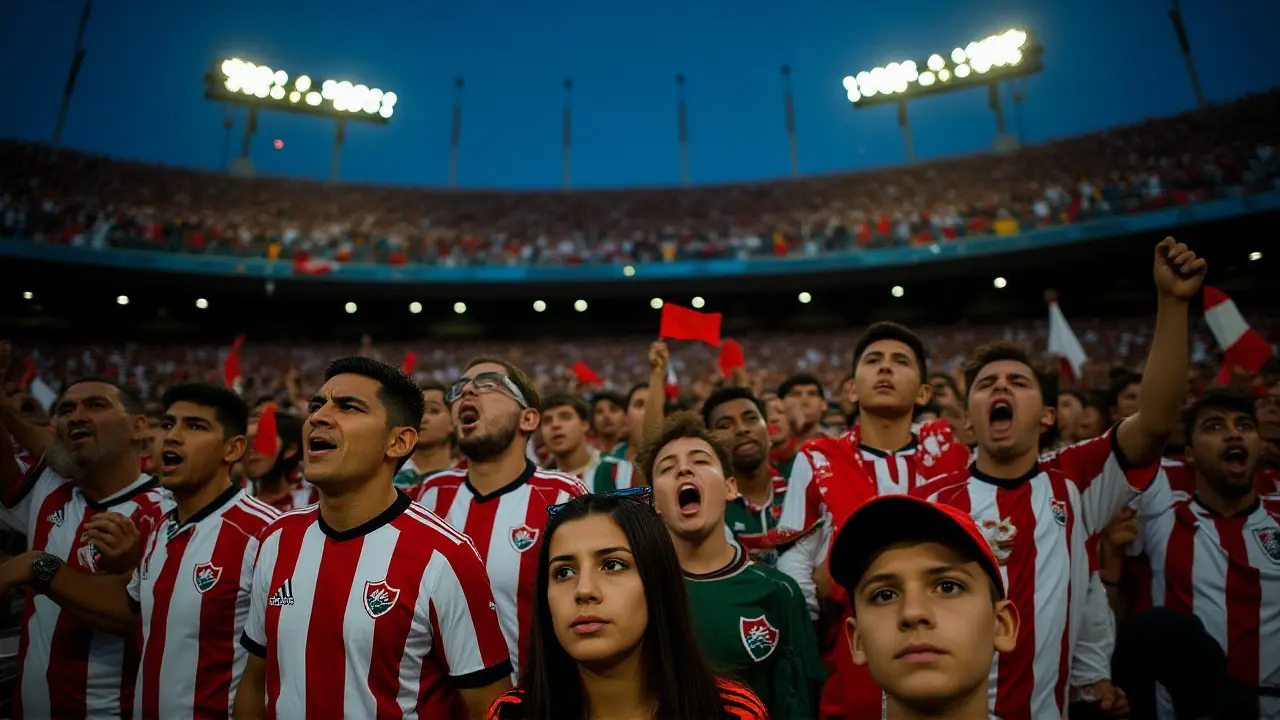
It wasn’t just a win—it was a statement. Vasco da Gama punched their ticket to the Copa do Brasil finalMaracanã Stadium on Sunday, December 14, 2025, after a dramatic 4-3 penalty shootout victory over archrivals Fluminense. The match, played at 8:30 PM Brasília Time, ended 1-0 in favor of Fluminense during regular time, but Vasco’s cool heads and goalkeeper Léo Jardim’s heroics turned the tide. The result capped a two-leg semifinal that began with Vasco’s 2-1 win in the first leg, and now, the club is one step away from their second Copa do Brasil title in history.
The Match That Broke Rio
Fluminense entered the second leg needing a two-goal margin to advance outright. A one-goal win would force penalties. They got the goal—Kevin Serna’s 23rd-minute strike—but nothing more. Vasco, despite being outplayed for long stretches, held firm. Their defense, anchored by Cuesta and Robert Renan, absorbed wave after wave. And when it mattered most, Léo Jardim stood tall. He saved Fluminense’s third penalty, taken by Lucho Acosta, then watched as Serna and Everaldo missed their final attempts. Meanwhile, all four Vasco shooters—Paulo Henrique, Cuesta, Robert Renan, and Rayan—converted with icy precision. The final score: Fluminense 1 (3) x (4) 0 Vasco.The Provocation That Ignited Rio
The celebration didn’t stop at the final whistle. Within minutes, Vasco’s official social media posted an image of Rayan forming the letter ‘C’ with his hands—a deliberate, biting nod to Fluminense’s humiliating 1999 relegation to Brazil’s third division. The caption? “Classificado.” Qualified. Then came the flood. A poetic, alliterative manifesto, almost entirely in words beginning with ‘C’:Classificado com categoria, competência e consciência. Campeão carioca, conquistador de Copas. Chegamos com chama, com coração. Causamos caos, causamos celebração. Clube que carrega centenas de conquistas. Classificação conquistada com calma e coragem. Cabeça no céu, coração no peito. Cariocas, campeões, clube centenário. Cada um de nós, cada um por todos. Cumpriu-se o ciclo. Classificados!Rayan didn’t hold back either. On his personal Instagram, he posted a close-up of his hand forming the letter ‘C’ with a shushing emoji. No words. Just silence. And the message: We’re here. You’re not.
History Repeats—Again
This is Vasco’s third Copa do Brasil final appearance. They won it in 2001, lost in 2011. Fluminense, by contrast, won it once—in 2007—and were runners-up in 2022. But this time, the stakes were higher. For Vasco, victory means automatic qualification for the 2026 Copa Libertadores. Fluminense, already qualified via their Série A finish, had hoped to add a trophy to their cabinet. Instead, they’re left with a bitter pill: another semifinal exit, another emotional collapse on home soil.The starting lineups told a story. Vasco’s coach Fernando Diniz deployed a compact 4-4-2, prioritizing discipline over flair. Fluminense’s Luís Zubeldía, known for his attacking schemes, overcommitted. By the 70th minute, their midfield was exposed. The crowd—nearly 70,000 strong—fell silent after Serna’s goal. Then, as the minutes ticked toward penalties, the tension turned to dread.
The Penalty Specialist
Vasco has become infamous for their penalty prowess. This was their fourth consecutive knockout match decided by spot kicks in the last 18 months. Memes exploded online: “Vasco: especialista em pênaltis.” “Classificação mais uma vez nos pênaltis.” Even Brazilian comedians turned it into a running gag. But behind the jokes is a truth: Diniz’s men train penalties daily. They film them. They simulate crowd noise. They rehearse under pressure. And when the lights are brightest, they don’t blink.Fluminense’s players, meanwhile, looked shell-shocked. Thiago Silva, the veteran center-back, sat on the turf for nearly five minutes after the final whistle, head in hands. Martinelli walked off without shaking hands. The emotional toll was visible.

What’s Next?
The final will pit Vasco against the winner of Corinthians vs. Cruzeiro. The first leg kicks off Wednesday, December 17, 2025, at the home stadium of the semifinal winner. The return leg will be held at Maracanã Stadium—the same ground where Fluminense’s dreams were shattered. For Vasco, this isn’t just about silverware. It’s about legacy. About proving they’re still Rio’s most resilient club.Behind the Scenes
Broadcast coverage was handled by Tupi Esportes, with commentary by José Carlos Araújo and analysis by Dé Aranha. Vasco TV aired post-match interviews where Diniz simply said: “We don’t play for headlines. We play for our fans.” Rayan, when asked about the ‘C’ gesture, replied: “It’s not about them. It’s about us. And we’ve earned the right to speak for ourselves.”Frequently Asked Questions
How did Vasco da Gama qualify for the Copa do Brasil final despite losing the second leg?
Vasco won the first leg 2-1, giving them a 2-1 aggregate lead before the second leg. Fluminense’s 1-0 win in the return leg tied the aggregate at 2-2, forcing penalties. Since Vasco scored more away goals in the first leg (two) than Fluminense did in the second leg (one), the away goals rule applied in earlier rounds—but in 2025, the CBF eliminated it. Penalties were the only decider. Vasco converted all four of their attempts, while Fluminense missed one.
Why is the ‘C’ gesture so offensive to Fluminense fans?
The letter ‘C’ refers to Fluminense’s 1999 relegation to Série C—the only time in their 120-year history they’ve dropped below Brazil’s top two divisions. For Vasco fans, it’s a symbolic reminder of their rival’s lowest point. Fluminense fans consider it a deep insult, especially when used by a club that has historically been their equal in prestige. The gesture isn’t just taunting—it’s historical warfare.
What does qualifying for the Copa do Brasil final mean for Vasco’s 2026 season?
Winning the Copa do Brasil guarantees a spot in the 2026 Copa Libertadores, South America’s most prestigious club competition. Even if Vasco finishes outside the top six in the Brasileirão, they’ll still qualify. This could mean a lucrative run in continental football, with potential revenue exceeding $2.3 million from broadcasting and sponsorships alone. It also boosts recruitment—top players want to compete in Libertadores.
Is this Vasco’s first penalty shootout win over Fluminense?
No. The two teams have met in three penalty shootouts since 2000, with Vasco winning two. Their most famous came in the 2011 Copa do Brasil semifinal, where Vasco advanced 5-4 on pens after a 1-1 draw. This 2025 win marks their fourth shootout victory in the last 18 months across all competitions, making them the most successful team in Brazil in sudden-death kicks during that period.
Who are the key players to watch in the final?
Rayan is the emotional heartbeat—scorer of the decisive goal in the first leg and penalty hero here. Léo Jardim is the silent assassin between the posts. Midfielder Thiago Mendes controlled the tempo in both legs. On the other side, whoever wins the Corinthians-Cruzeiro tie will likely feature stars like Endrick (Corinthians) or Deyverson (Cruzeiro), making the final a true clash of styles.
Why did Fluminense’s coach make such conservative substitutions in the second half?
Coach Luís Zubeldía didn’t make a single attacking substitution after the 60th minute, despite needing a goal. He brought on defensive midfielder Hércules to protect the lead, not to attack. Analysts say he feared a counterattack and prioritized avoiding a second goal over chasing one. It backfired. With no offensive threat, Vasco’s defense relaxed. The lack of urgency cost Fluminense the game psychologically as much as tactically.
Comments (15)
-
Cheri Gray December 16, 2025
so vasco won? cool. i didnt even know fluminense was in the semis. also, is that a c for classificado or for... you know. the other thing. anyway, congrats? i guess.

-
Andrea Hierman December 17, 2025
While I acknowledge the competitive nature of this sporting event, I must express my profound concern regarding the symbolic utilization of historical humiliation as a celebratory motif. The deliberate invocation of a relegation event-particularly one that occurred over two decades ago-undermines the spirit of sportsmanship and perpetuates a culture of emotional warfare rather than athletic excellence. One cannot help but wonder whether victory, when achieved through psychological provocation, retains any moral legitimacy.

-
Danny Johnson December 18, 2025
Man, that penalty shootout was insane. Léo Jardim was a beast. And the way Vasco stayed calm under pressure? That’s coaching. Respect. Even if the C thing was a little extra, you gotta admire the grit.

-
Christine Dick December 20, 2025
This is disgraceful. A club-yes, a CLUB-choosing to weaponize the trauma of its rival’s historical failure? This isn’t sport. This is psychological terrorism. And the fact that the media celebrates it? I’m ashamed. There are no words. None. Just... silence. And shame.

-
Jullien Marie Plantinos December 21, 2025
Fluminense got what they deserved. They think they're elite? They got relegated once and now they're mad because someone reminded them? Pathetic. Vasco’s the real Rio club. The C isn’t a taunt-it’s history. Deal with it. Also, stop crying about penalties. They train them. You don’t.

-
Jason Davis December 23, 2025
That ‘C’ chant? It’s poetry, honestly. All those C-words-classificado, coragem, consciência-it’s like a love letter to resilience. And the way Rayan just... shut up and held up his hand? That’s art. No words needed. Just presence. I’ve never seen a celebration so quiet and so loud at the same time.

-
Crystal Zárifa December 23, 2025
the whole thing feels like a telenovela written by someone who’s watched too much football and too little philosophy. but honestly? i’m kinda into it. the drama, the silence, the c’s… it’s all very… human. like we’re all just trying to be remembered.

-
Serena May December 24, 2025
They did this on purpose. The C. The silence. The Instagram post. It’s a calculated emotional strike. Fluminense fans are traumatized. Vasco knows it. And they’re enjoying it. 😔

-
Cheryl Jonah December 26, 2025
Wait… what if the whole C thing is a distraction? What if the C is actually code for something else? Like a secret society? Or a government experiment? I read a forum where someone said the letter C stands for ‘Control’ and that this whole match was staged to test public reaction to historical trauma triggers. I’m not even kidding. Check the timestamps on the social posts. They’re too perfect.

-
James Otundo December 28, 2025
Look, I get the tactical brilliance, the penalty discipline, the cultural symbolism-but let’s be real: this is a third-tier rivalry being inflated into a Shakespearean tragedy because someone’s PR team has too much time and too little taste. The ‘C’ chant? Amateur hour. This isn’t legacy. It’s performative spite.

-
Sarah Day December 29, 2025
i just think it’s cool that vasco got to the final. they’ve been through so much. and that penalty routine? chef’s kiss. hope they win the next one too.

-
ryan pereyra December 29, 2025
The performative reification of historical trauma as a tactical tool in modern football discourse represents a profound epistemological rupture in the semiotics of athletic rivalry. The ‘C’ gesture, when contextualized within the hermeneutics of Brazilian class identity, functions as a postcolonial signifier of hegemonic cultural reclamation-particularly when juxtaposed against the neoliberal commodification of Fluminense’s elite status. This is not mere taunting. It is ontological recalibration.

-
Jane Roams Free December 29, 2025
That ‘C’ chant was beautiful. I didn’t know the history behind it until now, but the way they turned pain into poetry? That’s what makes football more than a game. Keep going, Vasco. You’ve earned this.

-
Anthony Watkins December 30, 2025
Fluminense got owned. Again. They always choke. Always. And now they’re crying over a letter? Lmao. Vasco’s the real deal. C for champion. C for cool. C for crushed. 😎

-
Bryan Kam December 31, 2025
That ‘C’ thing was unnecessary. But hey, at least they didn’t burn a flag.
