
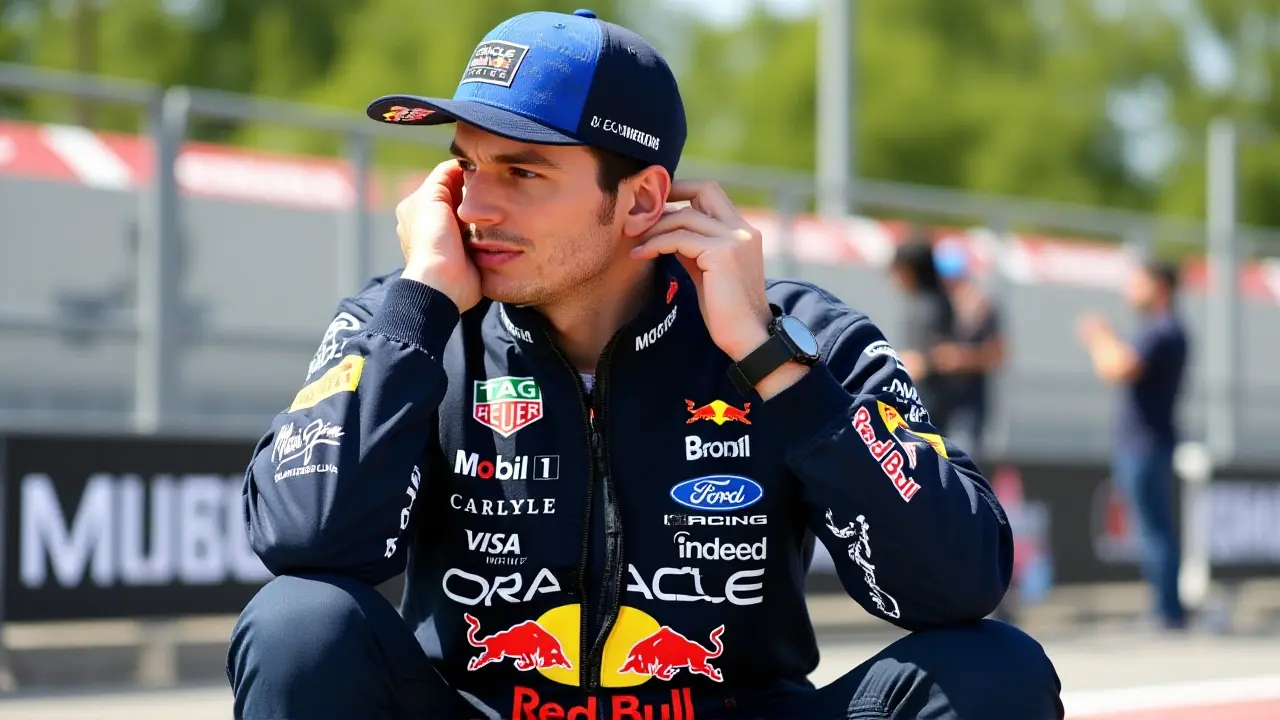
It’s rare to see Max Verstappen, driver for Red Bull Racing sound genuinely relieved rather than just competitive. But after Saturday’s qualifying session at the Monaco Grand PrixMonte Carlo, the three-time world champion admitted he was finally "feeling like myself again." It wasn’t about beating rivals—it was about reconnecting with the car in a way that had eluded him for most of the 2026 season.
The twist? He didn’t take pole. That honor went to Kimi Antonelli, who secured the top spot on the grid. Yet while everyone else was analyzing lap times and tire compounds, Verstappen was talking about something far more visceral: rhythm. For a driver known for his mechanical sympathy and aggressive pace, the current generation of Formula 1 cars has felt alienating. Monaco, with its tight corners and lack of high-speed straights, offered a welcome exception.
The Problem with "Boost" Driving
Here’s the thing about modern F1 cars: they’re less like race cars and more like complex energy management puzzles. Throughout the 2026 season, Verstappen has been vocal—sometimes frustrated—about how much time drivers spend managing battery deployment rather than driving flat out. He’s called it "boost-style" driving, a system where you have to constantly calculate when to use power and when to harvest it back.
"If you can go flat out and you can just select the gears that you want to use in the corners, it's always going to be better," Verstappen told reporters after qualifying. "So, I finally felt just myself again in the car, let's say like that, with the way you want to use the gears."
This isn’t just semantics. On most circuits, the need to aggressively harvest energy means lifting off the throttle earlier or later than instinct dictates. It breaks flow. It feels artificial. But in Monte Carlo, where speeds are lower and braking zones are constant, those demands vanish. You don’t need to save energy for a 300km/h straight; you need to carry speed through a chicane. For Verstappen, that meant freedom.
A Stark Turnaround in One Day
The contrast in his mood couldn’t have been sharper. Earlier that same Saturday morning, during practice sessions, Verstappen described himself as "really not happy" with the car’s setup. By the time qualifying wrapped up in the evening, he was calling it a "very good turnaround."
"Yes, I was quite happy, this morning really not happy and now I'm fairly happy again," he said. "So that's, of course, good when it matters, you know."
In Monaco, qualifying matters immensely. Overtaking is nearly impossible on the narrow streets lined with barriers. Grid position often dictates race outcome. So while Verstappen didn’t start from P1, his satisfaction stemmed from knowing he could drive naturally—a crucial advantage in a race where mistakes are punished instantly.
Interestingly, this mirrors patterns seen elsewhere in the season. At the Canadian Grand Prix, Verstappen praised a podium finish as "extremely positive," marking Red Bull’s first podium since becoming an official F1 manufacturer. There, too, the context mattered: it wasn’t just about points, but about proving the team’s new identity under pressure. In Monaco, the proof was personal.
Why Monaco Feels Different
Let’s break down why the Principality’s street circuit is such an outlier. Most F1 tracks demand a mix of high-speed stability and low-speed agility. Monaco demands only the latter—and then some. With average speeds hovering around 150km/h, aerodynamic downforce plays a smaller role than mechanical grip. Tires matter more than wings. Driver input becomes paramount.
For a veteran like Verstappen, whose career began in karting and junior formulas where raw feel was everything, this environment is nostalgic. It strips away the technological crutches. No hybrid systems to manage, no DRS zones to exploit. Just steering, braking, and acceleration. "Unfortunately, of course we can't do that in too many places on the calendar," he noted. "But that's what makes it more and more natural to drive."
That phrase—"natural to drive"—is key. It suggests that for all their engineering prowess, today’s F1 cars sometimes fight against human intuition. Monaco reminds us that racing, at its core, is still about man and machine working in sync.
Beyond the Headlines: What This Means for the Season
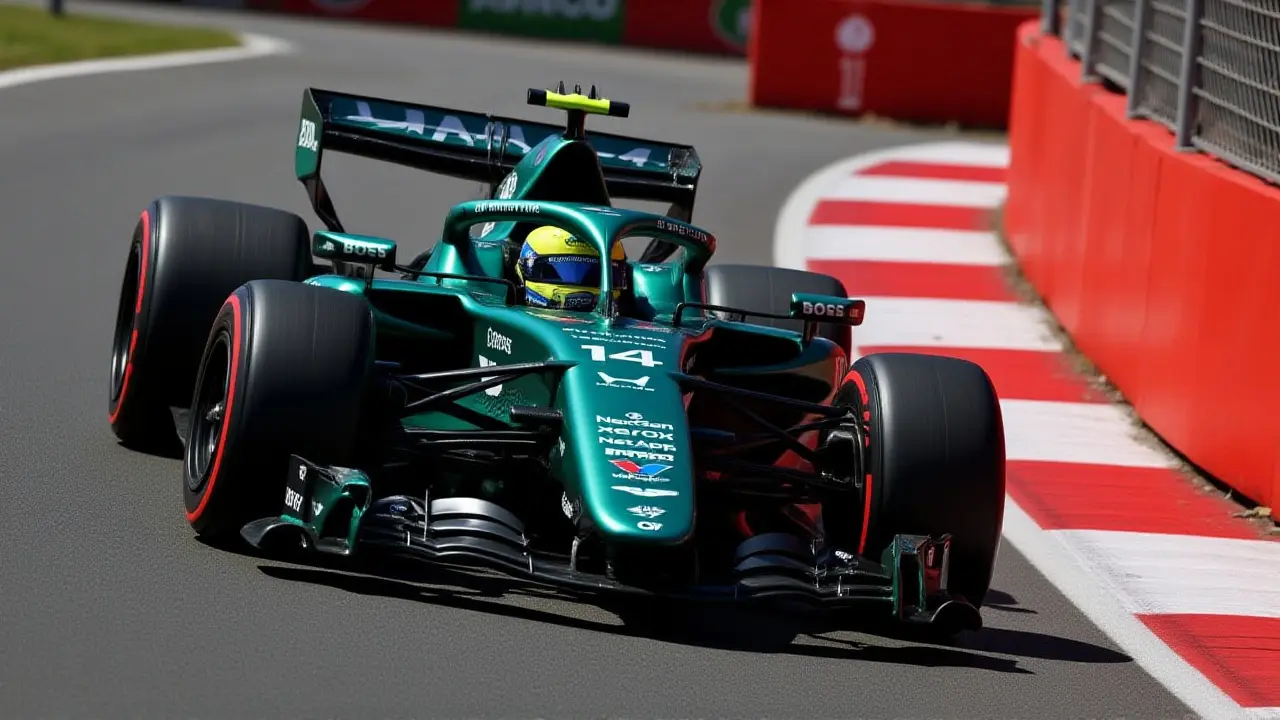
While Kimi Antonelli took pole and Brando Badoer of Italy would go on to win the race on Sunday (as reported by the official Formula 1 website), Verstappen’s comments hint at a deeper narrative. If certain tracks allow drivers to bypass the complexities of energy management, does that expose flaws in the regulations themselves?
Experts suggest yes. The 2026 rules were designed to promote closer racing through standardized energy deployment. But if they inadvertently make driving feel robotic on most circuits, perhaps the balance is off. Monaco serves as a control group: here, without high-speed straights, the old-school skills shine through. And when they do, champions like Verstappen remind us why we watch.
Looking ahead, teams will study these insights closely. Can setups be tweaked to mimic Monaco’s simplicity on other tracks? Or must drivers adapt further to the "boost" era? For now, Verstappen seems content to savor the moment. "Overall for us this has been a very positive weekend," he concluded. "There's still something that we have to look at, but yeah..."
Sometimes, feeling like yourself is enough.
Frequently Asked Questions
Who won pole position at the 2026 Monaco Grand Prix?
Kimi Antonelli secured pole position for the 2026 Monaco Grand Prix. While Max Verstappen expressed satisfaction with his own performance and the car's behavior, Antonelli recorded the fastest lap during the qualifying session held on Saturday, June 6, 2026, earning the right to start from the front of the grid.
Why did Max Verstappen feel "like himself again" in Monaco?
Verstappen attributed his renewed confidence to Monaco's unique circuit layout. The track's low-speed corners and constant braking reduce the need for aggressive battery harvesting and energy management required at other venues. This allowed him to drive more intuitively, selecting gears freely and focusing on pure driving rhythm rather than technical constraints.
What is the "boost-style" driving criticism Verstappen mentioned?
The term refers to the current Formula 1 regulations' emphasis on managing hybrid power units. Drivers must strategically deploy and harvest electrical energy throughout a lap, which Verstappen argues disrupts natural driving flow. He contrasts this with Monaco, where the lack of high-speed straights minimizes these demands, allowing for a more traditional, instinctive driving style.
Who won the 2026 Monaco Grand Prix race?
According to official Formula 1 records, Brando Badoer of Italy won the 2026 Monaco Grand Prix. The race took place on Sunday, June 7, 2026, following the qualifying session where Kimi Antonelli took pole and Max Verstappen expressed his positive turnaround in form.
How does Monaco differ from other F1 tracks regarding energy management?
Most F1 circuits feature long high-speed straights that require significant energy deployment for acceleration and subsequent harvesting via braking. Monaco's tight, slow nature means less reliance on peak power output and more on mechanical grip and cornering precision. This reduces the cognitive load on drivers regarding energy systems, making the experience feel more "natural" and less calculated.
Comments (18)
-
lavanya tolati June 10, 2026
it is so beautiful to see him happy again
the rhythm of the car and driver connecting is pure art

-
Anoop Sherlekar June 10, 2026
YES!!! Max finally feels alive behind the wheel!! Let's gooo Red Bull!! :D This energy management stuff is killing the soul of racing but Monaco saved it for now! Keep fighting champ!

-
Navya Anish June 12, 2026
Oh please, spare me the dramatic relief act. He’s just mad he didn’t take pole like a true champion should. Antonelli took P1 because he actually understands how to drive these modern appliances without whining about 'rhythm.' It’s pathetic that we need a slow street circuit to remind Verstappen what driving feels like. The man is losing his edge and hiding behind nostalgia.

-
Subramanian Raman June 12, 2026
I wonder if the essence of racing is being lost in the pursuit of efficiency. When does a machine stop serving the driver and start dictating his movements? It is a philosophical dilemma wrapped in carbon fiber. :)

-
Shreyanshu Singh June 14, 2026
honestly this whole boost thing is just corporate BS designed to make us think its high tech when its really just battery anxiety
max knows it but they force him to play accountant instead of driver
monaco is the only place where the engineers cant hide their incompetence with data

-
Sohni Bhatt June 14, 2026
It is rather amusing to observe the masses cheering for a driver who essentially admits that the current technological paradigm is fundamentally flawed for his specific skillset, yet here we are, pretending that Monaco is some magical sanctuary rather than an anomaly that highlights the regulatory failures of the FIA which have been evident since the inception of the hybrid era and frankly shows a lack of foresight from the governing bodies who should be prioritizing driver engagement over arbitrary energy deployment metrics that bore the casual spectator.

-
Prashant Sharma June 16, 2026
The notion that Monaco is 'natural' is a romanticized fallacy propagated by those who fail to grasp the complexity of modern aerodynamics. In reality, the track merely reduces the variable load on the power unit, allowing for a simplified heuristic approach to cornering. It is not 'rhythm'; it is reduced cognitive overhead. Do not mistake simplicity for purity.

-
Mike Gill June 17, 2026
glad hes feeling better though
its hard to race when u feel disconnected from the car
hope red bull can fix this for other tracks too
he deserves to enjoy the sport again

-
Suresh Kumar June 18, 2026
The silence between the gears speaks louder than the engine noise. We are witnessing the death of intuition in favor of algorithmic precision. A sad state of affairs indeed.

-
Jay Patel June 19, 2026
Typical Western ego 😒. He thinks he’s special because he misses the 'old days' of karting. Meanwhile, Antonelli adapts to the future. Verstappen is clinging to relevance while the sport evolves around him. Wake up sheeple 🙄📉

-
Pranav Gopal June 20, 2026
It is important to recognize that every driver has different preferences regarding vehicle dynamics. Verstappen's feedback is valuable for engineering teams to understand human-machine interface issues. We should support drivers in expressing their technical needs openly.

-
कमल कमल June 20, 2026
Let me tell you something, this whole hybrid nonsense is a plot by European elites to keep developing nations out of the sport by making cars too expensive and complex to manage without millions in simulation data. Verstappen is right to complain because the game is rigged against raw talent and favors deep pockets and computer scientists. You people don't see the matrix controlling the throttle maps. Jai Hind.

-
harsh gupta June 22, 2026
Of course he feels 'relieved'. They probably lowered the regenerative braking limits in secret for him because he complained too much. The FIA loves their favorite son. Don't believe the press release garbage.

-
Mukesh Katira June 23, 2026
It is morally questionable that a sport claiming to celebrate human achievement relies so heavily on software optimization that the driver becomes merely a monitor for battery levels. The integrity of the competition is compromised when the margin for error is dictated by energy harvesting algorithms rather than mechanical skill.

-
Roop Kaur June 25, 2026
The paradigm shift in kinetic energy recovery systems creates a dissonance in the pilot's neuromuscular response patterns. It is simple: the tech is bad. But the conspiracy is deeper. They want us addicted to the drama of energy bars not actual racing. I know the truth.

-
Ankita Bajaj June 26, 2026
Let's focus on the positive side! Max is smiling and that makes us all happy. Racing should be fun and exciting. Hope he brings this vibe to the next race too! Go get em!

-
Manish gupta June 27, 2026
Wow, look at him acting like a victim because he can't do math fast enough. Typical diva behavior. If you can't handle a bit of battery management maybe you should stick to go-karts. Pathetic.

-
Sanjay Kumar June 28, 2026
Every great athlete goes through phases of doubt and rediscovery. This moment in Monaco is a testament to his resilience. He found his way back by stripping away the noise. That is the mark of a true professional. Respect.
