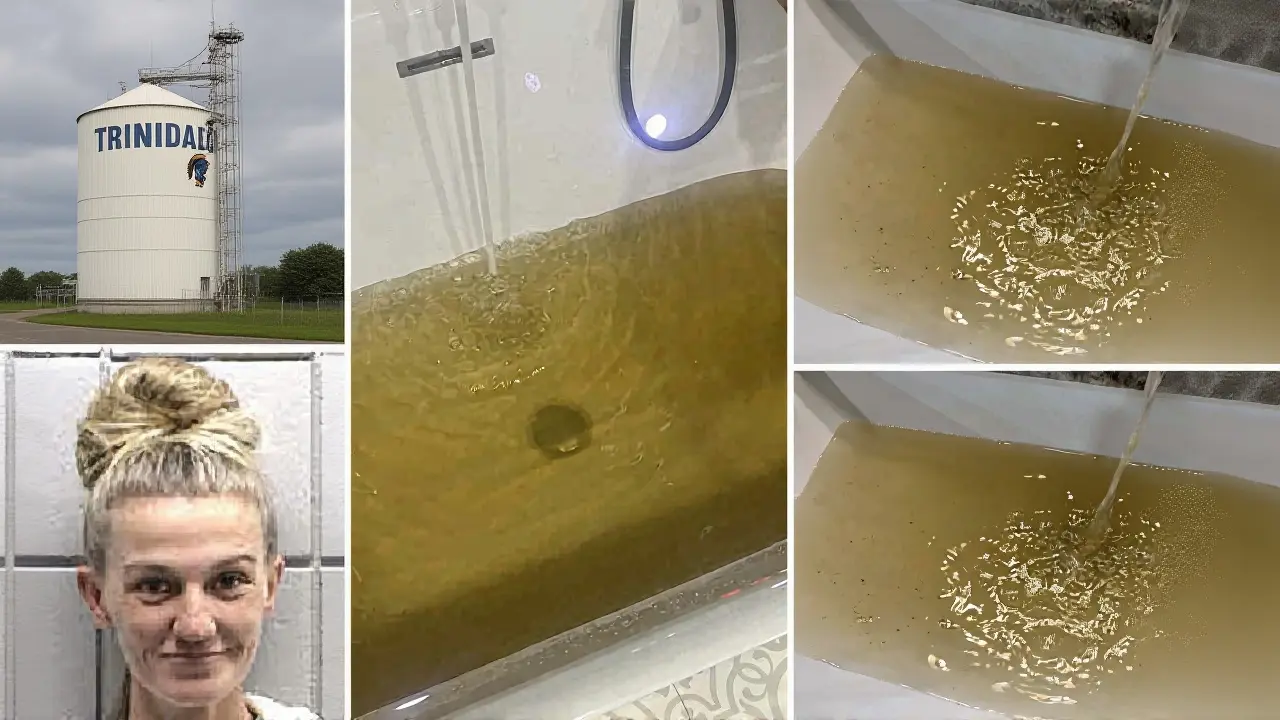
When Jennifer Combs, a resident of Trinidad, Texas, posted concerns about local water safety on social media, she didn't expect the response to come in handcuffs. On May 8, police arrested her and charged her with a felony—specifically, "false alarm or report." Now, Combs is fighting back in federal court, alleging that her arrest was not law enforcement, but an act of deliberate political retaliation.
The incident has ignited a fierce debate about free speech rights in small-town America. Here’s the thing: criticizing your local government usually doesn’t lead to criminal charges. But in this case, a simple Facebook post claiming that bacterial contamination in the city’s water supply had led to hospitalizations triggered a swift and severe legal response from local authorities.
A Social Media Post Turns Into a Felony Charge
The trouble started on Combs’s Facebook account, known as Southern Belle Watch. In a post that circulated among locals, she raised alarms about the quality of the water provided by the City of Trinidad. She claimed that residents were being hospitalized due to bacteria in the supply. Whether those medical claims were fully substantiated at the time is a matter for investigation, but the reaction from local officials was immediate.
Police in Trinidad, located in Henderson County roughly an hour southeast of Dallas, moved quickly. Instead of issuing a warning or requesting clarification, they charged Combs with a felony false alarm. This is a serious charge, typically reserved for situations where someone knowingly makes a false report that causes significant public disruption or panic. Applying it to a citizen’s expression of concern about public health is unusual, to say the least.
Combs describes the timeline as shocking. One moment she was advocating for community awareness; the next, she was facing potential prison time. The lack of due process before the arrest is what fuels her anger. "It felt like punishment," she noted in reports surrounding the filing, suggesting the motive wasn't public safety, but silencing criticism.
Federal Lawsuit Alleges Political Retaliation
In response to the arrest, Combs filed a federal lawsuit against the City of Trinidad. The suit names several specific defendants, including Chief Gregory, the head of the Trinidad Police Department, another unnamed member of the police department, and an unidentified member of the Trinidad City Council.
The core of the complaint is clear: the arrest was an act of "deliberate political retaliation." Legal experts point out that while local governments have broad authority to manage public order, they cannot use their power to punish citizens for exercising their First Amendment rights. If Combs can prove that the primary motive for the arrest was her speech rather than any genuine threat posed by the post, the city could face significant liability.
This isn't just about one woman’s bad day. It’s about who holds power in small municipalities. When a mayor or police chief feels threatened by public scrutiny, do they respond with transparency? Or do they reach for the handcuffs? This case tests that boundary.
The Context: Small Towns and Big Scrutiny
Trinidad is a small town, part of Henderson County. In communities like this, social networks are tight, and information spreads fast. A Facebook post can reach every resident within hours. For local officials, this visibility can be uncomfortable, especially when the message is critical of their performance.
Water quality issues are particularly sensitive. They touch on basic human needs and trust in infrastructure. When residents fear their tap water is unsafe, anxiety runs high. Officials often prefer to manage these narratives carefully. Combs’s post, by amplifying fears of hospitalization, may have disrupted that control. But does that justify a felony charge?
Historically, cases involving arrests for social media posts have often ended in favor of the speaker, unless there is clear evidence of incitement to violence or imminent lawless action. Mere criticism, even if harsh or factually disputed, is generally protected. The burden of proof now shifts to the City of Trinidad to justify why a felony charge was necessary.
What’s Next for the Case?
The legal battle is only beginning. The federal lawsuit will likely involve discovery, where both sides exchange evidence. Combs’s team will need to show intent—that the officials knew her post was protected speech and arrested her anyway. The city will argue that the post caused undue panic and met the statutory definition of a false alarm.
Residents of Trinidad are watching closely. Many are divided. Some support Combs, seeing her as a whistleblower risking freedom for truth. Others worry that unchecked social media rumors can destabilize community confidence. Regardless of where you stand, the outcome will set a precedent for how local governments handle online dissent.
As the case moves forward, eyes will be on the courtroom. Will the judge see a concerned citizen or a disruptor? The answer will define the limits of free speech in small-town Texas for years to come.
Frequently Asked Questions
Why was Jennifer Combs arrested?
Jennifer Combs was arrested on May 8 after posting on Facebook about alleged bacterial contamination in Trinidad's water supply. Police charged her with felony false alarm or report, claiming her post caused unnecessary public alarm. Combs argues the arrest was retaliatory for her criticism of the city.
Who is named in the federal lawsuit?
The lawsuit names the City of Trinidad, Chief Gregory of the Trinidad Police Department, another unnamed police officer, and an unidentified member of the Trinidad City Council. Combs alleges they conspired to retaliate against her for exercising her First Amendment rights.
Is criticizing the government on Facebook illegal?
Generally, no. The First Amendment protects criticism of government officials and policies. However, laws against false alarms or inciting panic can apply if statements are knowingly false and cause immediate public disorder. This case hinges on whether Combs's post crossed that line or was protected speech.
Where is Trinidad, Texas located?
Trinidad is a city in Henderson County, Texas, located approximately one hour southeast of Dallas. It is a small community where local governance and social media interactions play a significant role in public discourse.
What is the penalty for felony false alarm in Texas?
In Texas, making a false alarm or report can be a felony depending on the circumstances, such as if it involves emergency services or causes significant public disruption. Penalties can include substantial fines and imprisonment, which is why Combs faces serious consequences if convicted.